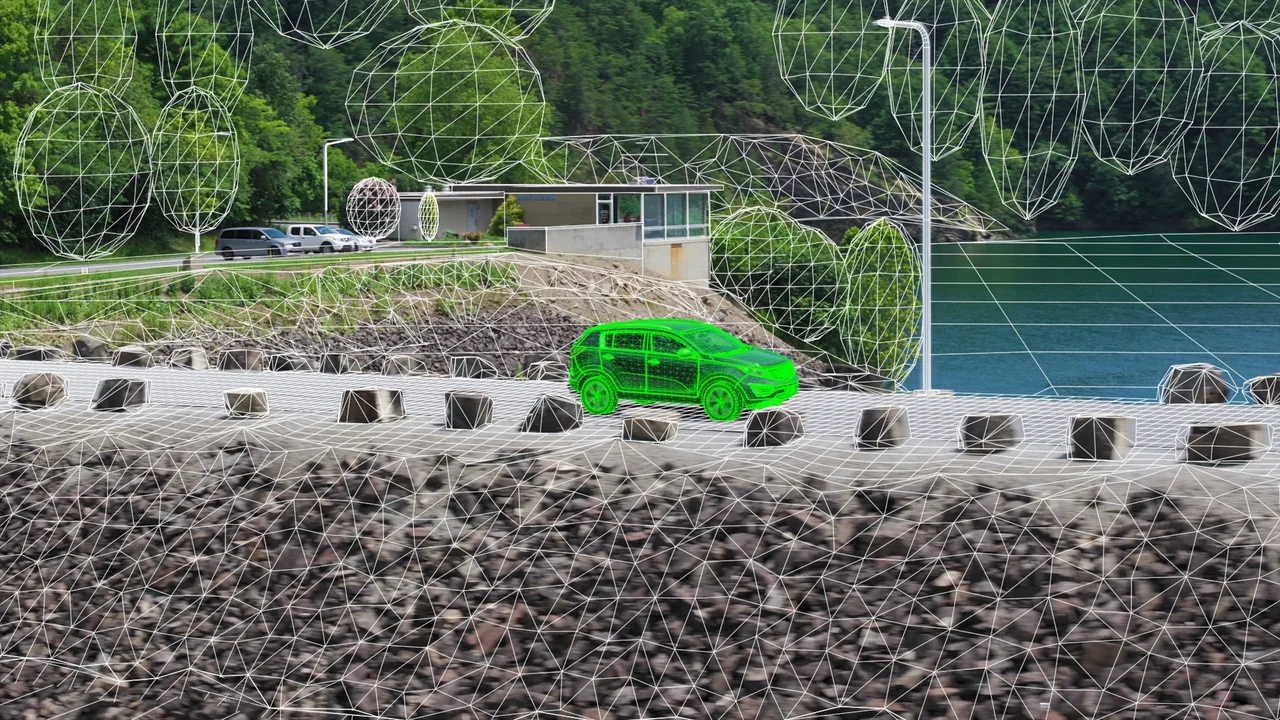
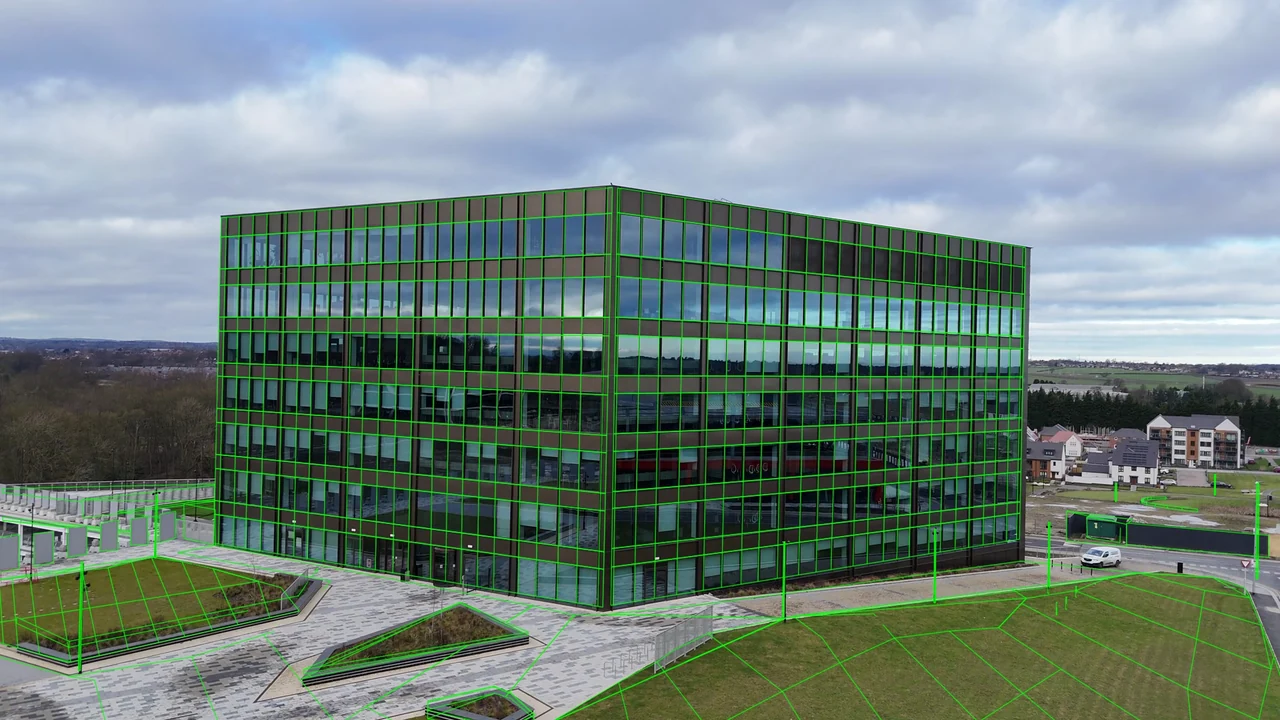
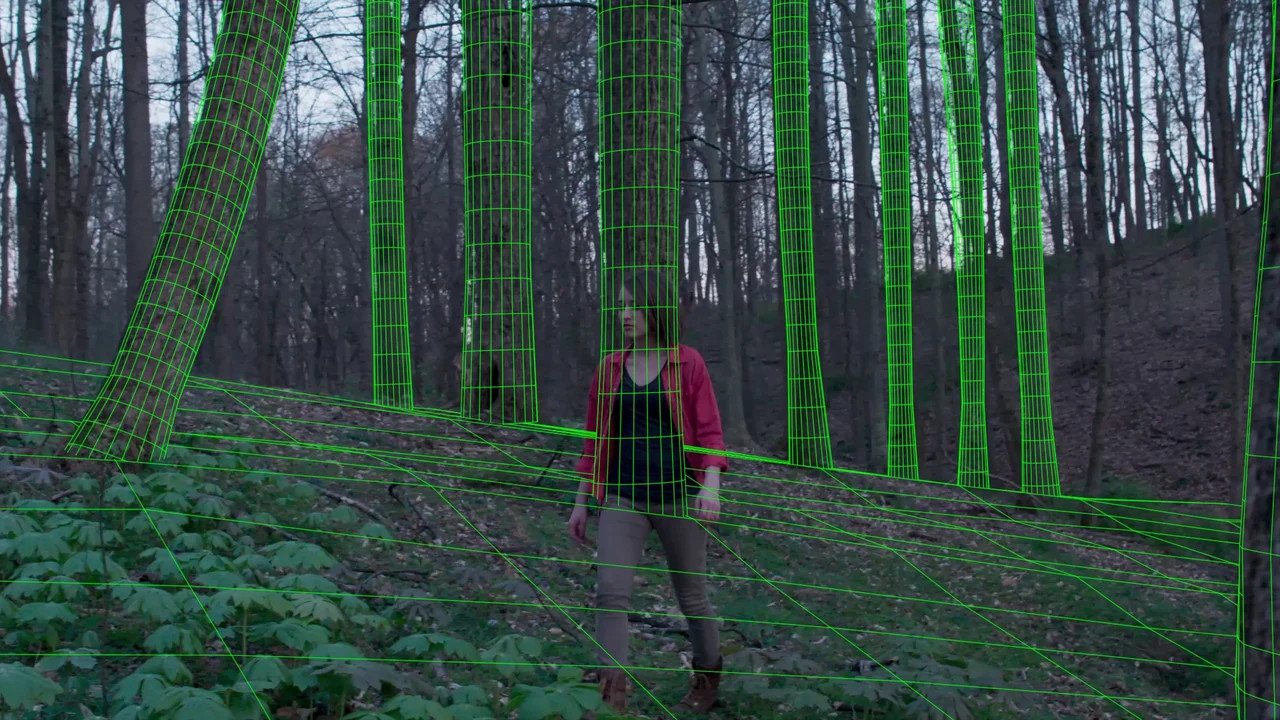
Depth across the whole structure.
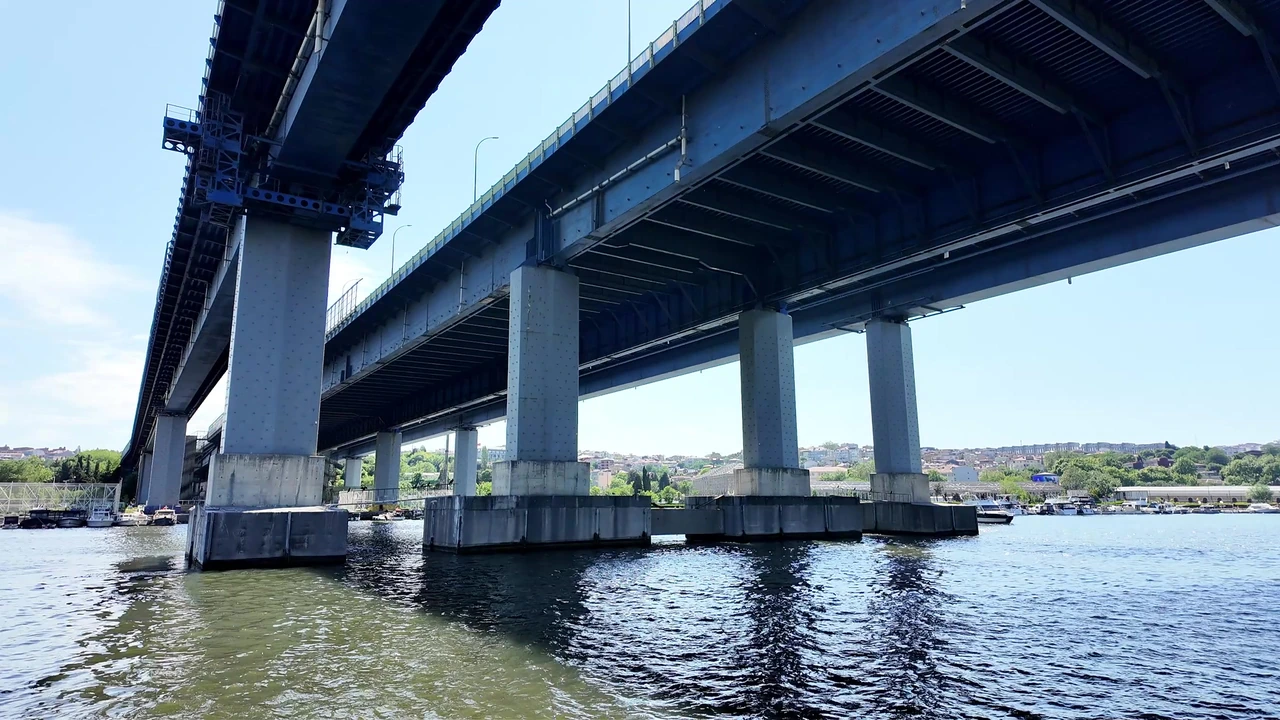
Near foundations, overhead beams and distant buildings move at different rates in the image. Thin bridge edges and shadowed junctions also make a single broad proxy surface insufficient.

Camera Tracking & Bridge Reconstruction
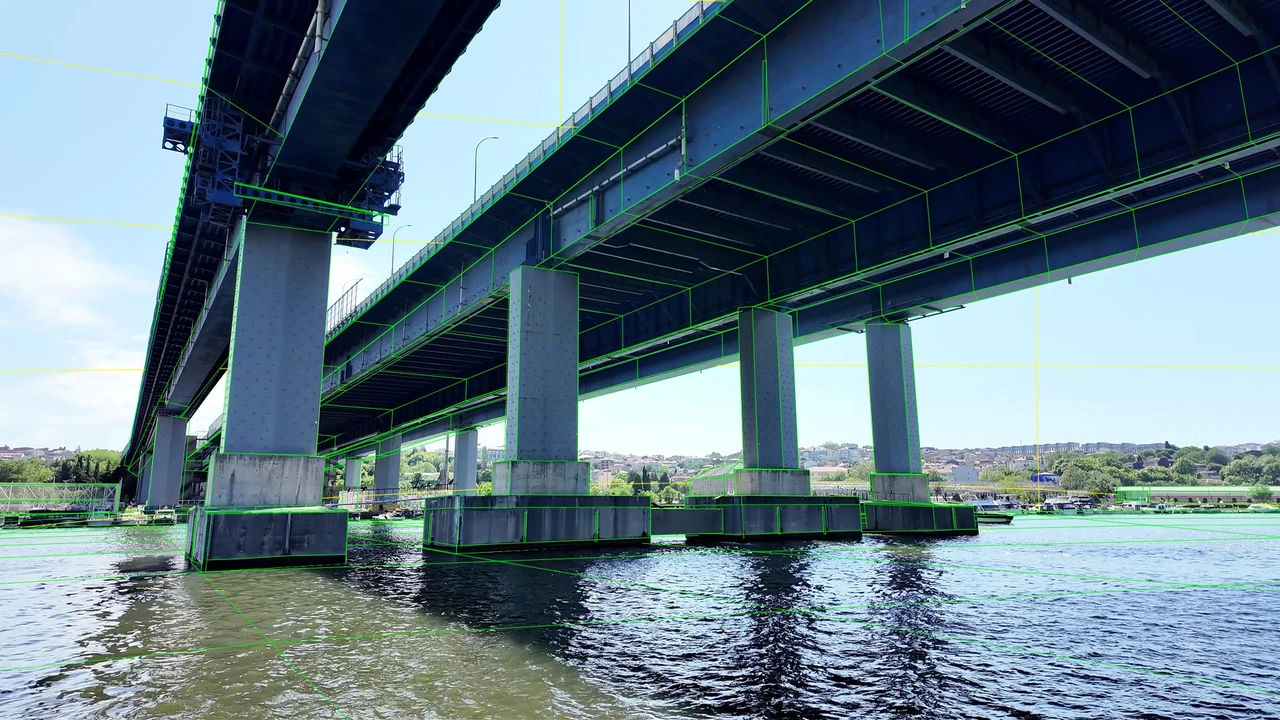
A camera track and structural reconstruction spanning bridge girders, pillars, foundations and the far bank.
Original plate → wireframe · Silent, edited breakdown.Download video ↗
Near foundations, overhead beams and distant buildings move at different rates in the image. Thin bridge edges and shadowed junctions also make a single broad proxy surface insufficient.
TrackArc FX refined the foundation returns and pillar contacts, then separated the bridge webs, flanges, soffits and crossbeams into distinct depths. Additional measured tracks supported these revisions and the quay, glasshouse and hillside proxies.
The study package contains a saved 3DEqualizer project, measured 2D tracks, a grouped OBJ proxy and native review renders. The bridge, supports and background remain static 3D geometry throughout the camera move.
Self-initiated camera and environment study covering the first five seconds of the plate. Object tracking is outside this study’s scope.
The same frame, before and after. Move the divider to inspect the geometry against the photography.
FROM PLATE TO REVIEW
The tracking, geometry and review stages behind this study.
Identify bridge edges, support junctions and far-bank features across the first five seconds. Moving boats, reflections and water do not provide rigid-scene constraints.
Use measured 2D features in 3DEqualizer4 to review camera perspective across near foundations, overhead structure and distant architecture. Revisit weak measurements where depth is uncertain.
Fit foundations, pillar returns, bridge webs, flanges, soffits and crossbeams as separate proxy surfaces. Keep the quay and hillside geometry separate from the bridge structure.
The saved 3DEqualizer scene supplies the native plate-based wireframe sequence. Projecting static geometry through the tracked camera exposes edge offsets, depth errors and contact mismatches.
Use Nuke to align the source and review sequences, prepare the presentation format and preserve consistent frame numbering. The comparison must show corresponding plate and wireframe frames.
Review the sequence in RV, concentrating on foundation corners, pillar contacts, bridge sides and the far bank. Keep moving water and boats outside the structural validation.
SCENE & REVIEW
The 150-frame 3DEqualizer scene was imported, saved, reopened and rendered in the application. The package includes the tracked camera, 2D measurements, named proxy groups and a plate-based review sequence.
Explore camera & object tracking services ↗Different shots. The same attention to perspective and depth.
Original plate: supplied Under_Bridge.mp4. Camera tracking and proxy reconstruction: TrackArc FX study. The plate handoff did not include a source licence or ownership document; publication rights remain unverified in the source provenance record.
Reconstruction notes. Depth and scale are estimated from monocular footage. Hidden and submerged faces, distant hillside depth and some occluded roof extents remain approximate. Moving boats and water are excluded from rigid-scene validation.
Source records for the four-shot presentation. Credits & source licences.